Is your child having too much screen time?

Dr Lauren Crumlish PhD, Certified Practising Speech Pathologist 2 min read
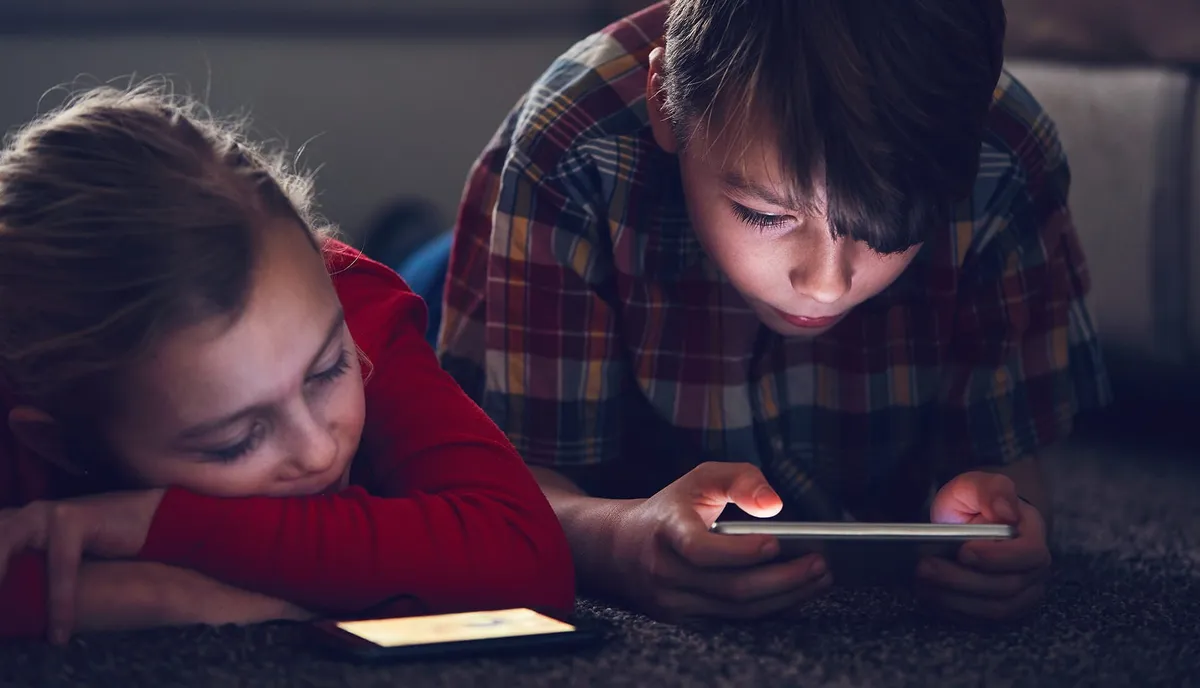
Screen time in isolation can not hope to compare to the power of a consistent and nurturing response of a caregiver.
A question and concern that I often receive clinically from parents relates to screen time and ‘how much is too much?’. This can be a tricky question to answer. In our modern society, it feels like IT and media is forever becoming more accessible and in-our-face. On top of that, children seem to possess a keen ability for technology – somehow, they are just so good at using it. When we consider busy mums and dad’s trying to balance the demands of daily life it is so easy to understand why screen time is an easy option that can free up many hands.
American Academy of Paediatrics – Guidelines (2016)
Just last year, the American Academy of Paediatrics updated their guidelines on screen time for children between 0-5 years. While they have lessened their stance, it seems that their general viewpoint remains: children’s exposure to screens should be limited and should not occur in isolation.
They specifically recommend:
- Avoid all screen-time for children younger than 18-24 months.
- If you are introducing media for a child between 18-24 months, opt for high-quality resources. Sit with your child and view the media together, commenting and reinforcing their learning. Avoid media being used without parental involvement.
- One hour of screen-time per day is recommended for children between 2-5 years of age. Again, co-view with your child to reinforce their learning.
What does it all boil down to?
Put simply – interaction. Interaction between a child and their trusted caregiver is absolutely critical for development. Screen time in isolation cannot hope to compare to the power of a consistent and nurturing response of a caregiver. Children, and particularly young children, need to experience hands-on exploration and back-and-forth social interactions with their care-giver to support their cognitive, language, physical, and social-emotional skills. It seems that young children are not able to learn from technology and IT in the same manner. In these younger years, they are just not able to translate and extend information from apps to the real world around them. And while there may be some merit for preschoolers (aged 3-5 years) engaging with educational programs such as Sesame Street, unfortunately, the higher-order thinking skills and executive functioning skills critical for school success (e.g., task endurance, emotional regulation) are ideally acquired through unstructured, social play.
Source: http://pediatrics.aappublications.org/content/early/2016/10/19/peds.2016-2591
Topics
- Children
- Devices
- Kids
- Literacy
- Reading
- Screen Time
- Technology