Skip to content

Social Communication

Social Communication Therapy For Children And Teens

Social communication therapy works with children and teenagers to build their social participation, confidence and social skills: joining in with play and conversation, understanding others, and making and keeping friends. Dr Lauren Crumlish (PhD) works online with children with and without a diagnosis, including autism and ADHD.

  • Dr Lauren Crumlish, PhD, Certified Practising Speech Pathologist
  • Trained in DIR Floortime, a relationship-based approach
  • Online sessions for children and teenagers up to 18 years
A smiling person wearing a white shirt with blonde hair tied back sits indoors next to a plant.

In plain terms

What social communication involves

Social communication is the use of language with other people. Much of it is unspoken: reading between the lines, sensing what someone else is thinking or feeling, and following the bigger picture of a conversation or story.

These skills sit behind humour, sarcasm and friendships, which is why a child who finds them hard can feel left out even when their words are clear.

A young child with dark hair laughs joyfully, wearing a cream-colored sweater. An adult partially visible beside them shares in the moment. Shelves with books and toys are in the background.

Signs To Look For

Signs Your Child May Benefit

Social communication difficulties can show at home, at school and with friends, with or without a diagnosis.

  • Difficulty making and keeping friendships

  • Difficulty joining in play that suits their age

  • Missing jokes, riddles and sarcasm that peers understand

  • Finding it hard to read between the lines or see another person's point of view

  • Social interaction difficulties linked to a diagnosis such as autism

How Dr Lauren Approaches Social Communication

A relationship-based approach

Dr Lauren favours relationship-based therapy, particularly for children with complex communication profiles and social interaction challenges. She is trained in DIR Floortime, a developmental approach built on the Developmental, Individual-Differences and Relationship-based model. It considers the whole child and aims to support the core abilities of relating, communicating, reasoning and thinking.

DIR Floortime starts from the child: their individual differences, their stage of development and what sparks their interest. Following the child's lead, therapy supports their language, thinking and social and emotional growth, and tries to understand why a child is finding something hard rather than only treating the behaviour that shows. It is strengths-based, and parents are the cornerstone of therapy.

Older children and teenagers

For older children and teenagers, therapy also works on the higher level language that friendships and school rely on, such as inferencing and understanding humour.

Online Sessions

What Therapy Involves, And Your Part In It

Sessions are held online by secure video. Parents are part of the therapy, not onlookers.

  1. Assessment

    Dr Lauren assesses how your child communicates and interacts, and listens to what you have noticed at home and at school.

  2. Sessions by video

    Therapy sessions are 45 minutes, held online while your child is somewhere familiar at home.

  3. Parents involved

    Dr Lauren supports you to understand your child's communication and to advocate for them.

  4. Progress reviews

    Dr Lauren tracks your child's progress and adjusts the plan to suit them.

Fees

Fees For Therapy And Assessment

The Mid-Length Assessment covers social communication. Ongoing therapy is charged per session.

Therapy

Treatment Session

Per 45-minute session + administration

$193

Matching assessment

  • $890

    Mid-Length Assessment

    School-aged language, literacy challenges and social communication

Medicare rebates are available with a GP referral. Private health and NDIS (self-managed or plan-managed) can also apply. See full pricing

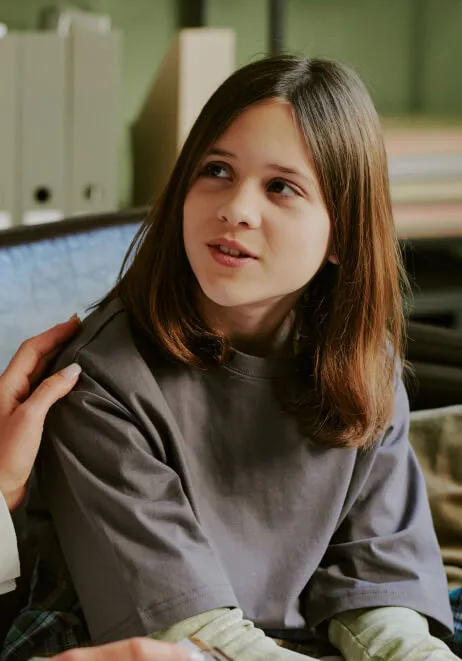
A young, brown-haired girl is sitting indoors on a couch, looking slightly to the side and talking. A speech therapist's hand is gently placed on her shoulder.

Questions Parents Ask

Answers Before You Apply

Does my child need a diagnosis?

No. Dr Lauren works with children who have a diagnosis such as autism or ADHD and with children who simply find social interaction hard.

What is DIR Floortime?

DIR Floortime applies the Developmental, Individual-Differences and Relationship-based model, developed by Dr Stanley Greenspan, in therapy. It is designed for children with developmental challenges and diagnoses such as autism, children who have experienced trauma, and children with social interaction challenges.

Is DIR Floortime just playing?

No. It follows the child's interests, so it can look like play, but it is a developmental intervention that aims to support relating, communicating, reasoning and thinking. It is also not a drill-based behavioural approach.

Can social communication therapy be done online?

Yes. Sessions are held online by video, and whether online sessions suit your child is considered at the start, including their attention and sensory needs and the support a parent can give.

A young person with curly hair and braces, wearing a denim shirt and white headphones around their neck, smiles at the camera while holding eyeglasses in one hand. A young boy in a white shirt smiles while looking to the left. A person with long brown hair wearing a blue shirt stands indoors, with a bright window and shelves with various items in the background.
A child reaches for a pink teddy bear placed on a table next to a rainbow-shaped wooden toy. Framed floral artwork is visible in the background. A person with curly hair smiles while wearing a white t-shirt and headphones. They are seated indoors with a light-colored background. A young girl with long blond hair and a light purple shirt smiles while sitting on a couch, gesturing with her hand. A woman and a young boy sit outside on a blanket. The woman shows the boy an object, and they both focus on it intently. The background is grassy and blurred.
A person with long hair is looking up and laughing outdoors, wearing a black and white striped shirt. Greenery is in the background. A young boy with brown hair and a grey t-shirt smiling while wearing white earphones. A young child wearing a yellow shirt holds a colored pencil above a piece of paper, appearing focused on drawing. Another person's hand is partially visible beside the child. Small toy vehicles, including two larger trucks and two mini cars, are scattered on a textured brown carpet.
A young child with Down syndrome, wearing a striped shirt, sits on a couch, smiling and raising a hand while looking at an open laptop. A young girl with braided hair sits on a couch, smiling at the camera. She is wearing a green shirt and appears relaxed. A man in a white t-shirt is smiling and looking to the side, surrounded by large green leaves.

Work With Dr Lauren

Apply For Consideration

Dr Lauren works with a small number of families and has limited availability. Tell us about your child to be considered.

Apply For Consideration
  • Evidence-Based Techniques
  • Comprehensive Assessments
  • Experienced Professionals
  • Child-Centred Care
Speech Clinic

Your child Who would Dr Lauren be working with?

This takes about three minutes.