Skip to content

Speech Clarity Therapy

Speech Clarity Therapy For Children

Speech clarity therapy helps children whose speech is hard to understand because sounds are left out, swapped or made in an unusual way. Dr Lauren Crumlish (PhD) assesses why a child's speech is unclear and works online with the child and their parents on articulation and pronunciation.

  • Dr Lauren Crumlish, PhD, Certified Practising Speech Pathologist
  • Articulation, phonological and motor speech difficulties
  • Online sessions for children from birth to 18 years
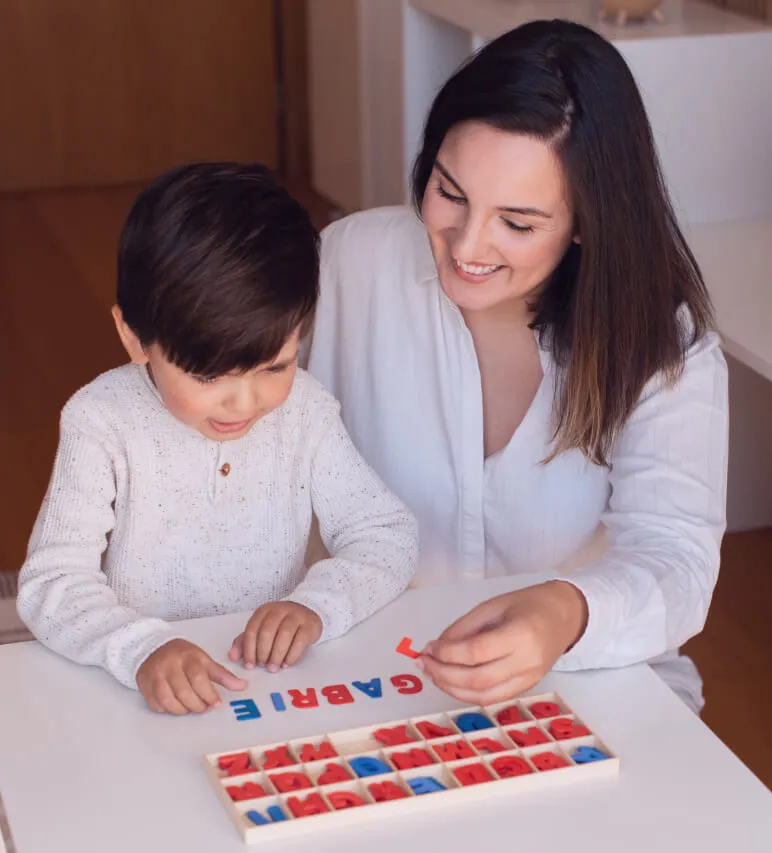
An adult and child are sitting at a table, playing with a wooden letter board, spelling out the word "GABRIEL." The adult is smiling and the child seems focused on the activity.

In plain terms

What is a speech sound disorder?

Speech sound disorder is the term speech pathologists use when a child's speech is harder to understand than expected for their age. The difficulty can sit in how sounds are physically made (articulation), in the patterns a child uses to organise sounds (phonological), or in planning the movements for speech (motor speech).

Children with unclear speech differ a great deal in severity, cause, the errors they make and how they respond to therapy, which is why assessment comes first.

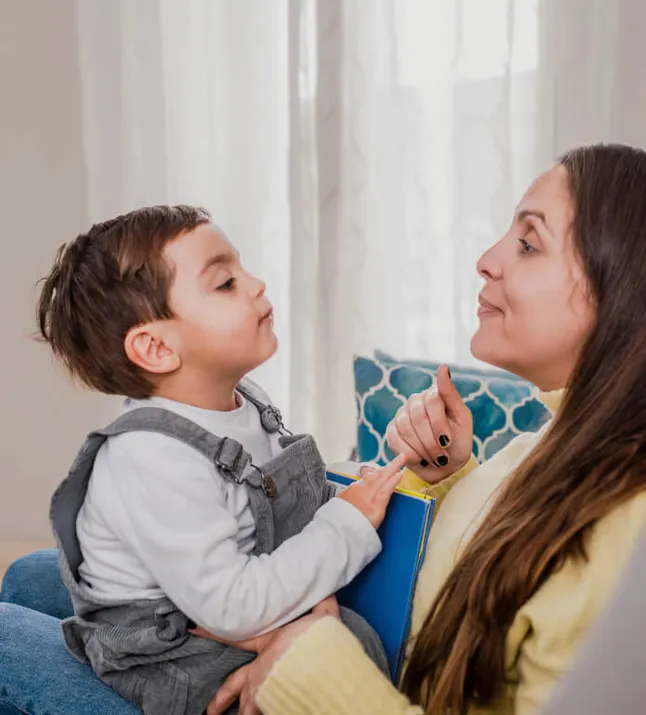
A young boy in overalls sits on a woman's lap, both engaged in conversation. The woman holds a book, and there are patterned cushions and a window with curtains in the background.

Signs To Look For

When Your Child's Speech May Need A Closer Look

By kindy age (about three and a half to four and a half), speech should be clear and understandable most of the time, even to people who do not know your child well. These signs suggest an assessment is worthwhile.

  • People outside the family often cannot understand your child

  • Sounds at the start, middle or end of words are left off

  • Early sounds such as t, d, p, b, k and g are still swapped or missed at kindy age

  • Longer words are shortened or simplified

  • The same word sounds different each time your child says it

  • Teachers or other children find your child hard to understand

How Dr Lauren Approaches Speech Clarity

Therapy starts with finding out why your child's speech is unclear. A speech sound assessment brings together what you know about your child's history, a sample of single words, a sample of everyday connected speech, and a check of which sounds your child is almost ready to produce. Together these show where your child's speech is strong and where it breaks down.

Therapy then targets what the assessment found, rather than following one approach for every child. As Dr Lauren writes in her article on classifying speech sound disorders, children with similar-sounding difficulties can respond differently to the same approach, so she plans for the individual child and reviews progress as therapy goes on.

Sessions use games deliberately. A well-chosen game helps a shy child settle, lets a child feel successful while working on something hard, and keeps motivation up through repeated practice. Read more in why speech pathologists use games.

Unclear speech often sits alongside other needs. Where language or early reading is also involved, Dr Lauren looks at language development and literacy as part of the same plan.
Online Sessions

What Therapy Involves, And Your Part In It

Sessions are held online by secure video, with your child somewhere familiar at home and a parent close by.

  1. Assessment

    Dr Lauren assesses your child's speech and talks with you about their history and your concerns.

  2. Sessions by video

    Therapy sessions are 45 minutes, held online, and built around games chosen for your child.

  3. Practice at home

    You are given the tools to practise between sessions. Home practice is one of the factors that most affects progress.

  4. Progress reviews

    Dr Lauren tracks your child's progress and adjusts the plan as their speech changes.

Fees

Fees For Therapy And Assessment

The Short Assessment is the one usually recommended for unclear speech. Ongoing therapy is charged per session.

Therapy

Treatment Session

Per 45-minute session + administration

$193

Matching assessment

  • $590

    Short Assessment

    Late talkers, stuttering and speech clarity difficulties

Medicare rebates are available with a GP referral. Private health and NDIS (self-managed or plan-managed) can also apply. See full pricing

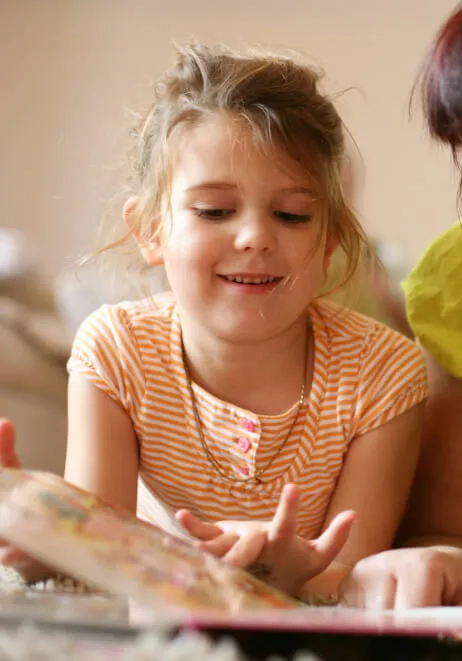
A young girl with blonde hair, wearing an orange striped shirt, smiles while looking at a book. Additionally, a partially visible person in a green shirt is next to her.

Questions Parents Ask

Answers Before You Apply

Will my child grow out of unclear speech?

Speech and language skills build on one another, so Dr Lauren's advice is to be wary of waiting to see. An assessment shows whether your child's speech is within the range expected for their age.

Can speech clarity therapy be done online?

Yes. Dr Lauren's sessions are held online by video, and articulation work suits the format. Whether online sessions suit your child is considered at the start, including their attention, your technology and the support a parent can give in the room.

How long does speech therapy take?

There is no fixed answer. The severity of the difficulty, how many areas of communication are involved, how consistently sessions happen and how much practice happens at home all affect how long therapy takes.

Can unclear speech affect reading?

It can. Children need a well-developed speech sound system when they start formal reading and writing in prep, and some types of speech sound disorder carry a higher risk of reading difficulties.

A young person with curly hair and braces, wearing a denim shirt and white headphones around their neck, smiles at the camera while holding eyeglasses in one hand. A young boy in a white shirt smiles while looking to the left. A person with long brown hair wearing a blue shirt stands indoors, with a bright window and shelves with various items in the background.
A child reaches for a pink teddy bear placed on a table next to a rainbow-shaped wooden toy. Framed floral artwork is visible in the background. A person with curly hair smiles while wearing a white t-shirt and headphones. They are seated indoors with a light-colored background. A young girl with long blond hair and a light purple shirt smiles while sitting on a couch, gesturing with her hand. A woman and a young boy sit outside on a blanket. The woman shows the boy an object, and they both focus on it intently. The background is grassy and blurred.
A person with long hair is looking up and laughing outdoors, wearing a black and white striped shirt. Greenery is in the background. A young boy with brown hair and a grey t-shirt smiling while wearing white earphones. A young child wearing a yellow shirt holds a colored pencil above a piece of paper, appearing focused on drawing. Another person's hand is partially visible beside the child. Small toy vehicles, including two larger trucks and two mini cars, are scattered on a textured brown carpet.
A young child with Down syndrome, wearing a striped shirt, sits on a couch, smiling and raising a hand while looking at an open laptop. A young girl with braided hair sits on a couch, smiling at the camera. She is wearing a green shirt and appears relaxed. A man in a white t-shirt is smiling and looking to the side, surrounded by large green leaves.

Work With Dr Lauren

Apply For Consideration

Dr Lauren works with a small number of families and has limited availability. Tell us about your child to be considered.

Apply For Consideration
  • Evidence-Based Techniques
  • Comprehensive Assessments
  • Experienced Professionals
  • Child-Centred Care
Speech Clinic

Your child Who would Dr Lauren be working with?

This takes about three minutes.